
Indicators of serious violations of international humanitarian law are increasing in the context of the U.S.–Israeli military operations in the region, after preliminary information revealed a large number of civilian casualties, including children and women, as a result of bombardments that struck civilian facilities in Iran and Lebanon.
According to Reuters, preliminary investigations conducted by the U.S. military showed that an American strike on the first day of the war on Iran resulted in the killing of 165 female students and teachers inside a school in the Minab area in southern Iran. Human rights institutions and organizations described the incident as one of the deadliest attacks in the region.
The targeting of an educational facility crowded with students raises serious legal questions regarding the extent to which the forces responsible for the attack complied with the principles of international humanitarian law, particularly the principle of distinction between civilian and military targets and the principle of proportionality—both of which are fundamental rules stipulated in the Geneva Conventions and their additional protocols.
Legal experts state that schools are considered protected civilian objects, and that targeting them or exposing them to attack—unless they are clearly and demonstrably used for military purposes—may amount to a war crime requiring international investigation and accountability.
In this context, international humanitarian law imposes an obligation on the international community to take urgent action to ensure an independent and transparent investigation into the incident, determine legal responsibility, and ensure that perpetrators of violations do not escape accountability.
“Widespread Human and Material Losses”
Data issued by the Iranian News Agency indicate that the death toll resulting from the U.S.–Israeli attacks on Iran reached 1,230 people as of yesterday, amid continuing airstrikes and attacks targeting various areas of the country.
For its part, the Iranian Red Crescent announced that the U.S. and Israeli attacks widely targeted residential and commercial infrastructure, with 4,800 civilian facilities destroyed, including 560 commercial centers and shops, in addition to 14 medical facilities—including hospitals and ambulances—since the beginning of the war. This has led to widespread displacement and a worsening humanitarian situation for civilians.
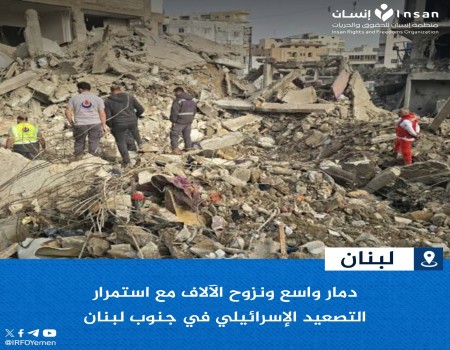
In Lebanon, the Lebanese Ministry of Health announced that the death toll from Israeli airstrikes has risen to 126 people, with 704 others injured, in addition to the destruction of dozens of residential buildings, while rescue teams are facing difficulties reaching some affected areas.
These developments raise increasing concerns about the safety of medical and commercial facilities that are specifically protected under international humanitarian law. The Geneva Conventions stipulate the obligation to protect hospitals, medical facilities, and ambulance services, and prohibit targeting them or obstructing their work, given the direct impact such actions have on civilians’ lives and their ability to access medical care during armed conflict.
“Calls for Investigation and Accountability”
Human rights organizations affirm that the continued targeting of residential neighborhoods and civilian facilities threatens to exacerbate the humanitarian catastrophe in the region and requires urgent international action to stop attacks against civilians.
These organizations also stress that the protection of civilians constitutes a binding legal obligation on all parties to the conflict, and that any violation of these rules may constitute war crimes under international law, which necessitates independent investigations and the prosecution of those responsible before international justice.
Amid the rising number of casualties and widespread destruction, international calls are growing for the United States to halt hostilities, ensure respect for the rules of war, and provide immediate protection for civilian populations and vital facilities, foremost among them schools and hospitals.