The United Nations Under-Secretary-General for Political and Peacebuilding Affairs, Rosemary DiCarlo, has called on the international community to take urgent action to stabilize the ceasefire in the Gaza Strip, warning that the continued humanitarian and political deterioration threatens to reignite the entire region.
During the monthly open meeting of the United Nations Security Council on Wednesday evening on the situation in the Middle East, including the Palestinian question, DiCarlo stressed that international efforts must unite to reinforce the ceasefire in Gaza.
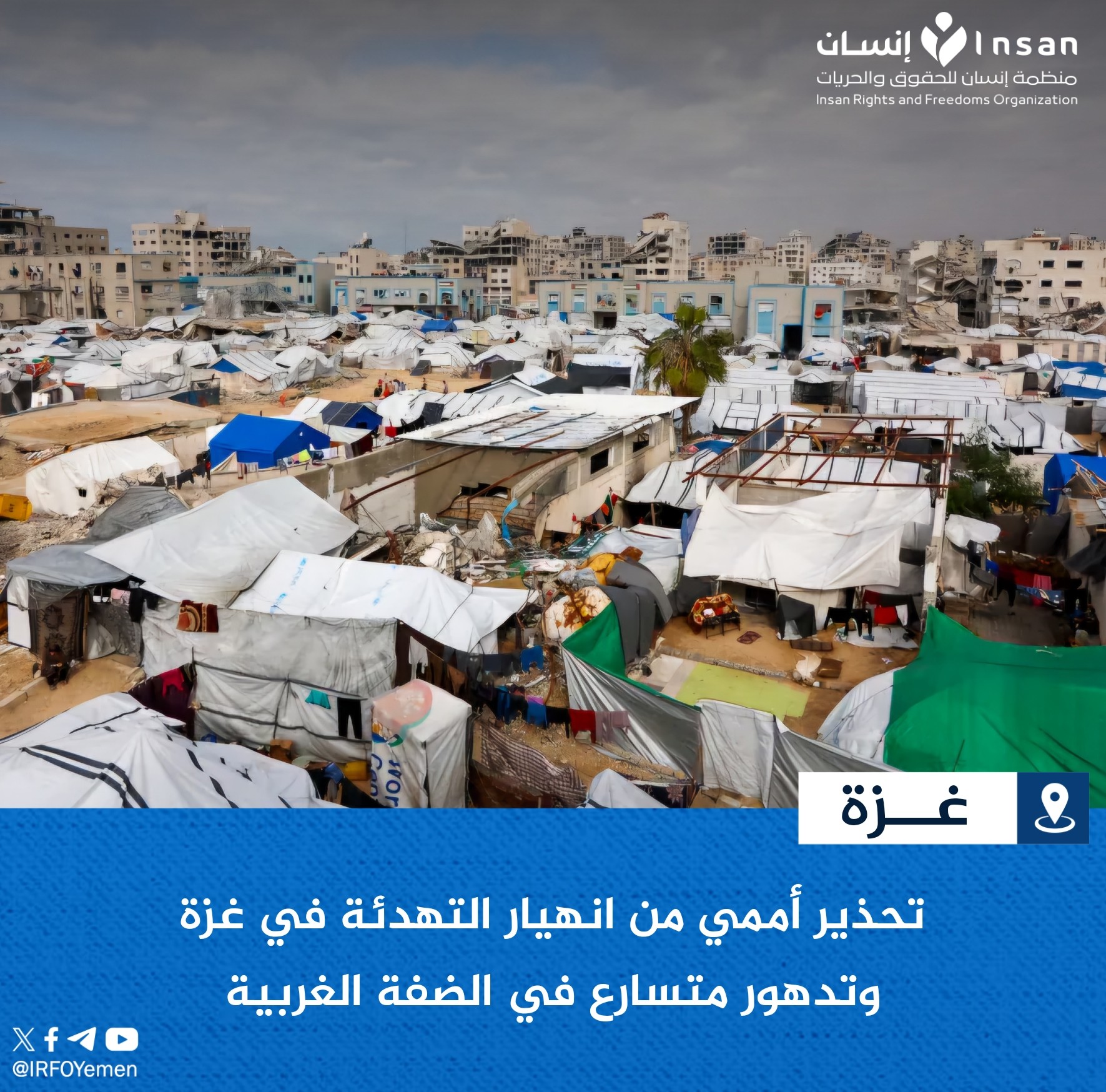
The UN official emphasized that the immediate priority is to increase the flow of humanitarian aid into the Gaza Strip and to open the Rafah Crossing in both directions to ensure the entry of relief supplies and the evacuation of humanitarian cases. She described the humanitarian reality as “extremely harsh,” noting that the majority of the population remains displaced and is facing tragic living conditions.
She explained that despite the announcement of a ceasefire, Gaza has yet to experience calm, pointing out that the Israeli army has intensified its strikes, threatening to undermine any fragile progress achieved so far.
DiCarlo stressed that international efforts must focus on consolidating the truce and alleviating the suffering of civilians, who continue to pay the highest price.
Regarding the West Bank, DiCarlo warned of a rapid and dangerous deterioration in the situation, citing ongoing Israeli operations and what she described as the “gradual de facto annexation” of parts of the West Bank.
She also expressed the United Nations’ concern over Israeli decisions allowing a series of measures and the transfer of powers there.
DiCarlo reaffirmed that all settlements in the West Bank and East Jerusalem have no legal validity under international law, warning that the international community cannot afford the consequences of half measures in the peace process.
She concluded by emphasizing that the current moment requires genuine political will and responsible collective action before the region slides into a more dangerous and complex phase.