
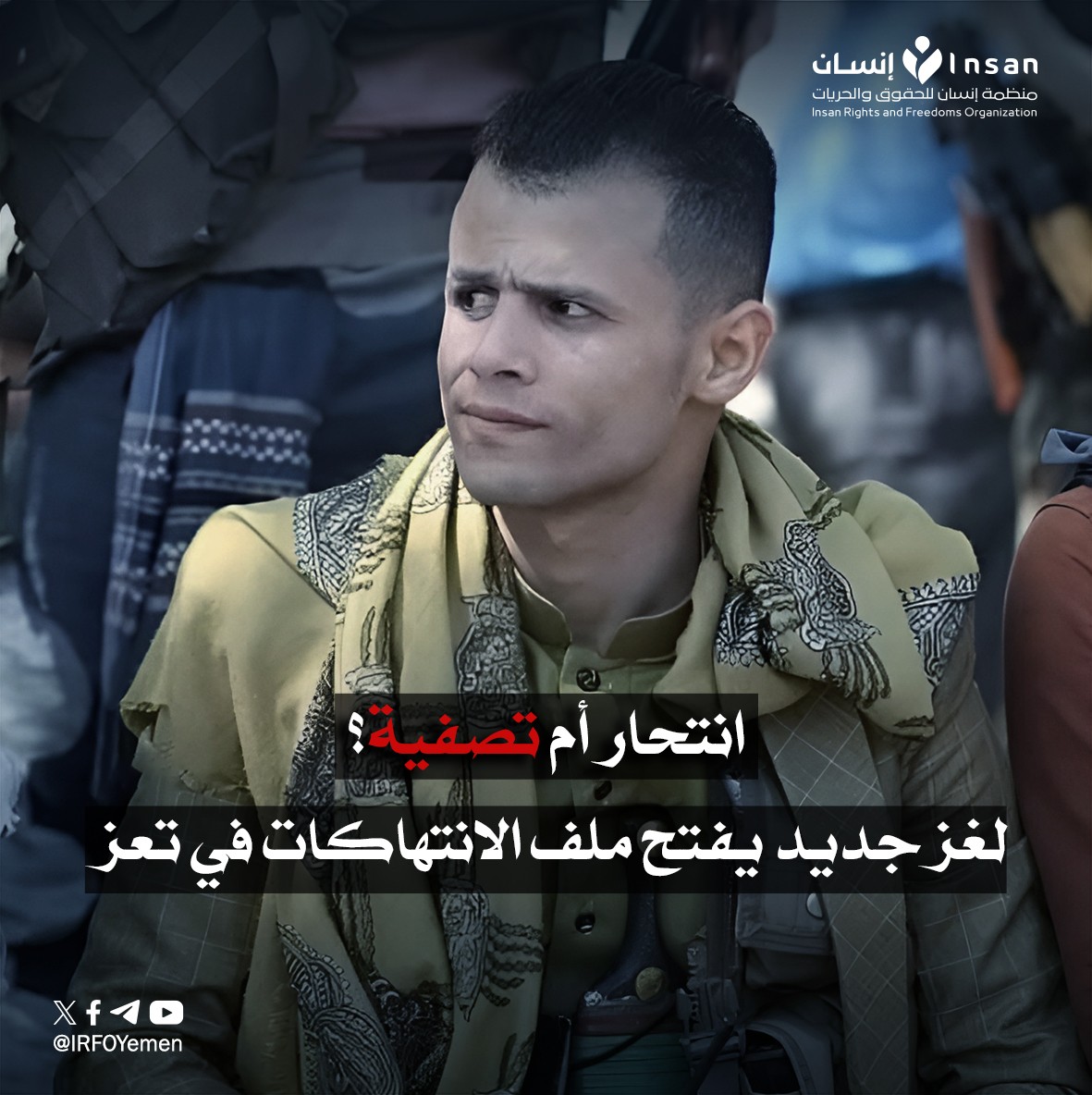
Waves of chaos continue to sweep through the city of Taiz, deepening the public sense that the protection system meant to safeguard civilians is collapsing.
A place that was supposed to be a safe haven has turned into a landscape where killings and abuses are concealed under the labels of “suicide” or “mysterious circumstances,” while the path to justice remains rugged and blocked for victims and their families.
In the latest horrifying incident, media sources reported the death of Mujahid Al-Shaibi inside the Political Security headquarters in Taiz, where he was found in his cell lifeless.
Although prison authorities announced that the death resulted from “suicide,” the circumstances surrounding the incident sparked a wave of anger and widespread suspicion—especially after the body was transferred to Al-Thawra Hospital without any transparent account or preliminary investigation results.
These developments coincided with statements from former military leaders in Taiz, who indicated that Al-Shaibi—one of the detainees in an investigation related to the assassination of a senior security official—may have been assassinated inside the detention facility, with his death later attributed to “suicide.”
This account was given by former commander Moataz Al-Araj, who spoke of moving the body from the Political Security headquarters to the Central Prison before announcing the death in a questionable manner.
These events deepen concerns about the ongoing violations inside prisons and detention centers, raising pressing questions about the fate of investigations whose results have yet to be disclosed, and about the absent role of judicial and oversight bodies in protecting detainees’ rights and ensuring procedural transparency.
Today, Taiz stands at a critical juncture: amid the chaos of unchecked weapons and the erosion of state institutions, a dangerous pattern of impunity is taking root, while victims’ rights remain suspended between conflicting narratives and investigations that never see the light.
The continuation of such violations signals an alarming collapse of the justice system in the city and poses a direct threat to citizens’ basic rights. It becomes imperative for the responsible authorities to:
Launch an independent and transparent investigation into the circumstances of Mujahid Al-Shaibi’s death.
Disclose the results of the investigations to the public.
Hold accountable any entity or individual proven to have mistreated detainees or caused their death.
End unlawful detention practices and strengthen prosecutorial oversight of detention facilities.
Remaining silent about these crimes is a form of complicity. Taiz—exhausted by corruption and chaos—deserves a justice system immune to the dominance of weapons and partisan influence, one that protects human dignity and restores even a minimal sense of the security the city has lost.


