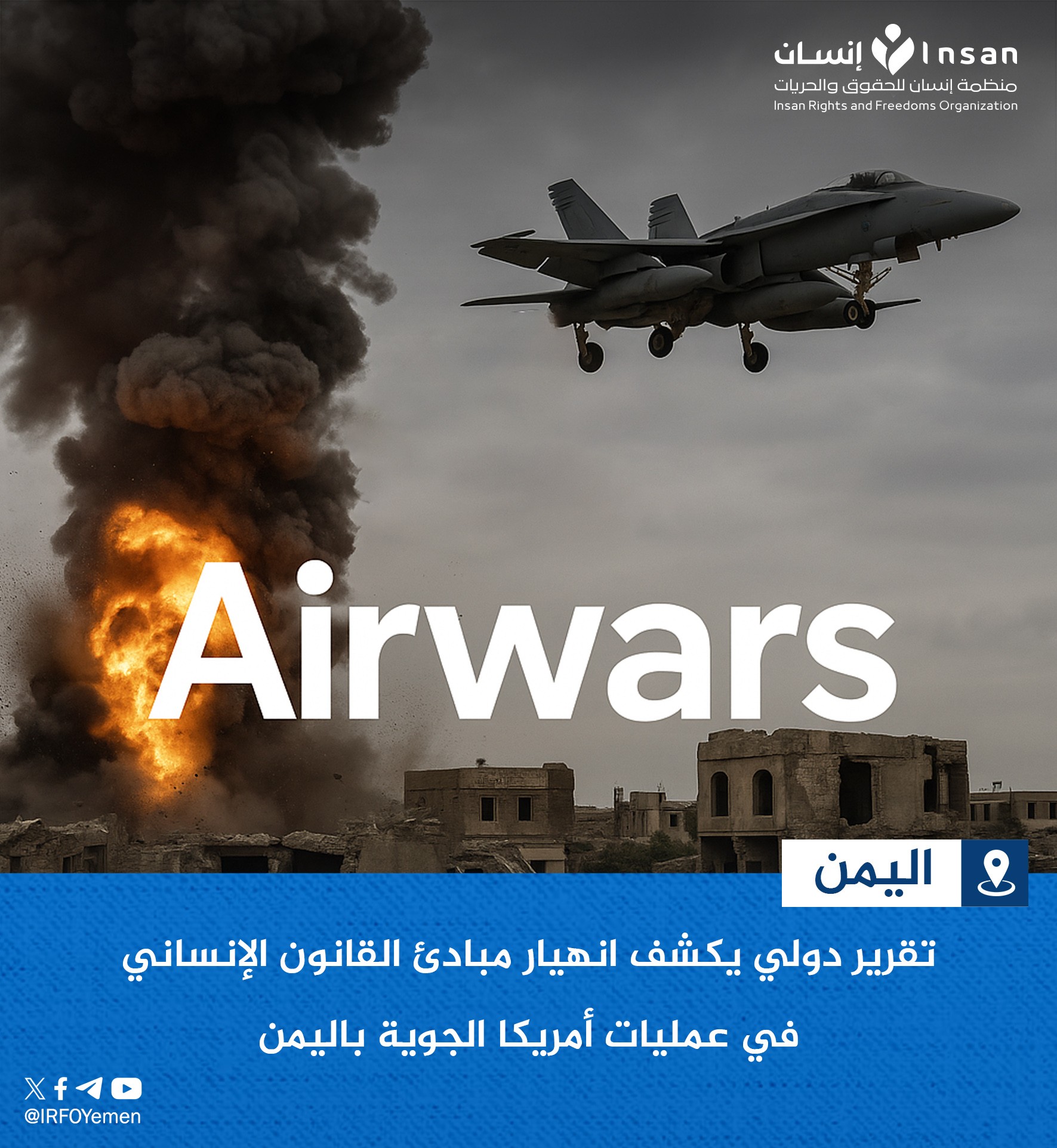
An international organization has shed light on U.S. violations during its recent campaign in Yemen, highlighting an unprecedented rise in civilian targeting and a complete lack of accountability.
Airwars, an organization specializing in monitoring the humanitarian impact of military operations, revealed shocking figures regarding the toll of U.S. airstrikes in Yemen during a military campaign launched by the administration of President Donald Trump in March and April 2025.
According to the report, which was released late last week, the airstrikes resulted in the deaths of at least 224 civilians in just 52 days—a figure nearly equal to the total civilian death toll from 23 years of U.S. military intervention in Yemen since 2002, which stood at 258 civilian casualties.
The organization described this toll as “unprecedented” in terms of both intensity and bloodshed, noting that the recent campaign under the Trump administration recorded the highest civilian casualty rate of any previous U.S. military operation in the country.
Commenting on the report, Airwars Executive Director Emily Tripp stated, “Western and international media are largely ignoring the scale of the humanitarian disaster in Yemen, which effectively provides a tacit cover for these types of violations to continue without accountability.”
She added, “These figures cannot be separated from the broader political context, in which civilian lives are reduced to mere numbers in official reports, while the real suffering of people on the ground is ignored.”
In its conclusion, Airwars called for an independent and transparent international investigation into the recent U.S. air campaign in Yemen and urged accountability for any potential war crimes. The organization also demanded that media outlets and human rights groups be granted access to affected sites in order to document violations and support the victims.
The organization stressed that the time has come to end policies that allow the use of military force with such impunity, calling on the international community to reaffirm the principles that should govern armed conflicts—chief among them, distinguishing between military and civilian targets and avoiding disproportionate harm.